
Communication in Property Management: The Industry’s Weakest Link
Property management is an intricate play between physical assets, resident expectations, maintenance operations and compliance duties.
Amid this complexity, communication between property managers and residents has traditionally been treated as a secondary concern - an administrative function rather than a strategic pillar.
Yet in 2025, the evidence shows that weak communication is a systemic risk.
Residents often feel uninformed, managers are drowning in repetitive queries, and regulators are tightening requirements for clear, transparent engagement.
This post examines the scale of the problem, its root causes, and why communication must evolve into a structured infrastructure.
It then explores how 30Seconds Tech is helping property managers transform communication from their weakest link into their strongest asset.
1. A crisis lurking in plain sight
Recent research by the UK estate agency Wilson Hawkins surveyed more than 88,000 people living in flats. The results were stark:
27 % said they do not receive updates from their block management company very frequently
another 11 % said that very frequent updates are rare.
38 % of respondents were somewhat dissatisfied with the level of detail in communications.
45 % were neutral on whether their block management company actually addresses issues mentioned in communications
Perhaps most damning: 100 % of residents said they were dissatisfied with how complaints or issues are communicated or resolved.
These statistics illustrate that even when communications occur, they frequently lack clarity, depth or follow‑through, leading residents to distrust the process.
2. The regulatory imperative: Building Safety Act
Regulators are no longer leaving communication to chance.
The UK’s Building Safety Act 2022 - enacted in the wake of the Grenfell Tower tragedy - places explicit duties on building owners and managers to engage residents.
Guidance from the National Housing Federation explains that the Act requires clear routes for residents to resolve safety concerns and mandates that residents have access to key building‑safety information.
The “Accountable Person” for high‑risk buildings must establish a resident engagement strategy and a complaints procedure, ensuring residents are kept informed and can participate in safety‑related decisions.
The strategy must be prepared, periodically reviewed and shared with all residents, and it should include details on how residents will be consulted on building‑management decisions. In short, communication and resident engagement are no longer optional; they are a statutory obligation.
Failure to comply carries risks. The Health and Safety Executive guidance notes that if residents ignore safety notices, the accountable person must keep a record of any communication they have with the resident and may seek a court order.
The Act also requires the Principal Accountable Person to display required information and documentation clearly within the building and operate a complaints system. Such provisions reflect a regulatory recognition that poor communication is a safety hazard.
3. Root causes of the communication gap
Why is communication so dysfunctional? There are several structural causes.
Fragmented channels: Many property managers rely on a patchwork of email blasts, paper notices, resident portals and ad‑hoc messaging apps. Messages are duplicated or missed because there is no single, visible point of engagement. Residents are left to guess which channel matters, leading to confusion and message fatigue.
Low frequency and lack of timeliness: The survey data shows that more than one in four residents rarely receive updates. Communications often arrive only when absolutely necessary, so residents feel neglected. When urgent messages do come, they may arrive too late for residents to act.
Ambiguity and lack of detail: Half of residents report unclear messaging. Many notices lack context: they tell residents what will happen but not when, why or how it will affect them. This breeds frustration and prompts follow‑up queries.
Weak feedback loops: Communication is not just about sending messages; it is also about listening. Surveys show 45 % of residents are neutral about whether issues raised in communications are actually addressed. When residents feel their feedback vanishes into a void, trust erodes.
Cultural inertia: Some property managers still see communication as an after‑thought, failing to invest in modern tools or skills. Yet residents increasingly expect on‑demand information via digital channels.
These failures impose hidden costs.
More complaints and disputes mean more staff time and legal exposure.
Residents who feel unheard are more likely to move out, increasing vacancy rates and marketing costs.
Regulators may impose fines for failing to meet engagement requirements.
As poor communication cascades through operations, it undermines brand equity and net operating income.
4. The human dimension: why residents feel it so acutely
Behind statistics lie the everyday experiences of people living in managed buildings.
When a lift breaks down unexpectedly and there is no notice, residents may get stuck carrying groceries upstairs.
When a building fire‑alarm test occurs at 7 am without warning, parents may panic.
When service charges go up without explanation, trust plummets.
Residents are not just “tenants”; they are customers paying for a safe, comfortable home.
They want to know what is happening, why it is happening and how it affects them.
The Vico Homes Tenant Satisfaction Measures survey from 2024‑25 illustrates that when communication works, satisfaction rises.
84 % of Vico’s residents said they are kept informed about things that matter to them. High satisfaction also accompanied safety and repair performance - 87 % were satisfied with their most recent repair, and 86 % felt their home was safe.
These numbers demonstrate that clear, consistent communication is achievable and that it correlates with broader service satisfaction.
The challenge is scaling such practices across an industry that still relies on outdated channels.
5. Communication in Property Management: Technology and emerging best practices
Modern property managers recognise that communication requires infrastructure. Several trends are shaping the future:
Unified resident engagement platforms: Instead of using separate tools for notices, maintenance updates and surveys, managers are adopting platforms that centralise communications across digital screens, mobile apps, email and SMS. These systems can segment messages by building, floor or resident type, ensuring relevance and avoiding overload.
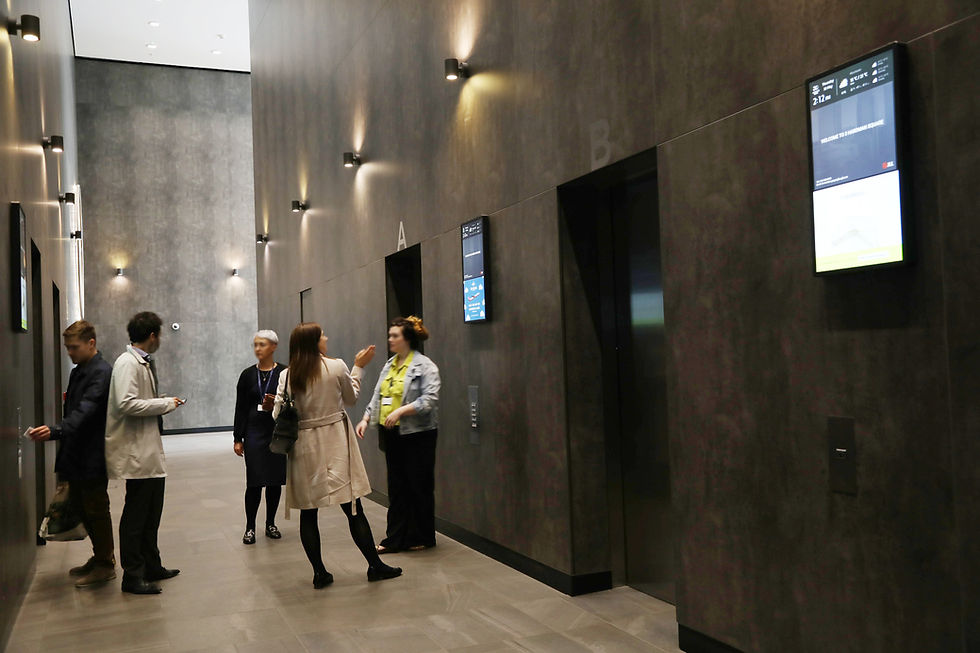
On‑site digital displays: Digital noticeboards placed in high‑traffic areas such as lift lobbies or foyers have high dwell‑times (around 30 seconds per view, according to 30Seconds Tech’s data) and near‑universal visibility. They ensure that critical messages reach residents even if they don’t check an app or email.
Two‑way engagement: Surveys, polls and acknowledgement features allow residents to respond quickly. Data analytics help managers track who has seen a notice, which messages generate questions and which topics need clarification.
These trends point toward a future where communication is integrated, data‑driven and user‑centric.
6. 30Seconds Tech: bridging the gap
30Seconds Tech operates at the intersection of proptech and media.
Its core insight is that building communication needs a physical presence in the places residents pass every day.
The company installs high‑definition digital screens in entrance lobbies, lift cars and corridors, along with a cloud‑based platform for content management and data analytics.

According to the company’s data, the average resident uses a lift multiple times per day, spending around 30 seconds waiting; 96 % of residents see the displays, and 73 % use the lift at least three times per day.
This captive attention window becomes a powerful communication channel.
What differentiates 30Seconds Tech from general digital signage is its integration with property‑management workflows.
Managers can schedule maintenance notices, safety announcements or community events at specific times or to specific buildings.
Residents can scan QR codes on‑screen to acknowledge receipt, participate in quick polls or access deeper information.
The platform automatically archives each message, providing a verifiable audit trail that helps managers comply with the Building Safety Act’s documentation requirements.
Because the system is cloud‑managed, updates can be pushed instantly across multiple sites, ensuring consistency. Content can also be tailored with localised advertising or community information, creating new revenue streams for building owners or cost offsets for managers.
By combining high‑visibility hardware with flexible software, 30Seconds Tech addresses the core problems of low frequency, poor visibility and lack of feedback.
7. Benefits and outcomes
Investing in communication infrastructure yields measurable benefits for property managers and owners:
Reduced complaints and improved trust: Clear, timely information reduces uncertainty and pre‑empts grievances. When residents feel informed, they are less likely to call or email repeatedly about the same issue.
Improved compliance: A digital record of notice delivery and resident acknowledgement supports accountability under the Building Safety Act and can be used to demonstrate due diligence to regulators.
Enhanced safety culture: On‑site screens can display evacuation plans, fire safety reminders and test schedules, ensuring messages are seen and acted upon. They can also be used to share progress on building‑safety improvements, building trust.
Operational efficiency: Centralised content management reduces duplication. Managers can update dozens of buildings with a single click and track which notices have been read. Integration with property management systems automates recurring communications (e.g., service charge reminders, contractor visits).
Resident engagement and community building: Polls and surveys allow residents to voice preferences - such as preferred times for maintenance or interest in community events - giving managers data to tailor services. This aligns with the Building Safety Act’s requirement to give residents a say in decisions.
Commercial opportunities: The high dwell‑time screens can display local business advertising, creating a non‑intrusive revenue stream to offset installation costs.
8. Implementation roadmap: moving from reactive to proactive
For managers and owners considering a communication overhaul, a structured approach is key:
Audit existing channels: Identify all channels currently used (email, paper, portals, group messaging). Analyse frequency, clarity and resident feedback to determine pain points.
Map information flows: Determine which types of information require high visibility (safety notices, maintenance disruptions), which can be delivered digitally (billing, documentation) and which require two‑way engagement (surveys, complaints).
Select infrastructure: Choose a platform that unifies on‑site screens with digital channels. Ensure it supports segmentation, scheduling, two‑way interactions and compliance logging.
Develop content guidelines: Create templates for different notice types. Use plain language, clear headings, and indicate why the message matters. Ensure messages meet regulatory requirements (e.g., plain English, contact details).
Train staff and set processes: Assign responsibilities for creating and approving messages. Set schedules for routine updates (e.g., weekly building updates, monthly safety tips) and define escalation procedures for urgent notices.
Launch and iterate: Roll out in pilot buildings, collect resident feedback, and refine. Use analytics to track engagement (e.g., which messages are viewed, dwell times) and adjust content frequency and style accordingly.
Integrate with compliance: Ensure that communications, resident acknowledgements and complaints are archived, supporting the Building Safety Act’s resident engagement strategy requirements.
Regulatory changes such as the Building Safety Act 2022 mean that robust communication is no longer optional.
30Seconds Tech offers a pragmatic solution, treating communication as infrastructure.


Comments