
The Omnichannel Blind Spot That Nobody Is Talking About
Here's a number worth sitting with. According to Ofcom's 2025 Online Nation report, UK adults spend an average of four hours and thirty minutes a day online. That sounds like a lot of time to advertise into.
It also means that in a sixteen-hour waking day, the average person spends roughly twelve hours somewhere that digital media cannot reach them.
Most omnichannel strategies are built around the four and a half hours. Almost none of them are built around the twelve.
The Measurement Trap
This isn't laziness on the part of planners. It's a structural problem baked into how media gets evaluated. Digital channels are easy to measure, so they attract the most investment. The logic feels circular but it works: measurability drives budget, budget drives scale, scale drives more data, and more data reinforces measurability. The whole ecosystem rewards the channels you can attribute, regardless of whether they're the channels doing the most work.
The trouble is that measurability and effectiveness aren't the same thing, and the gap between them has been widening for years.
According to Fraudlogix's Q1 2026 ad fraud data report, roughly one in five programmatic impressions globally is invalid, meaning it was never seen by a human being at all. Applied to US programmatic spend alone, that invalid traffic rate represents an estimated $37 billion in wasted advertiser budget annually. The dashboard looks clean. The delivery confirmation says 100%. The audience was, in part, a bot.
This is not an argument against digital advertising. It is an argument for looking carefully at what "measurable" actually means in practice, and whether the channels that feel most accountable are delivering what their dashboards suggest.
What Twelve Hours Offline Actually Looks Like
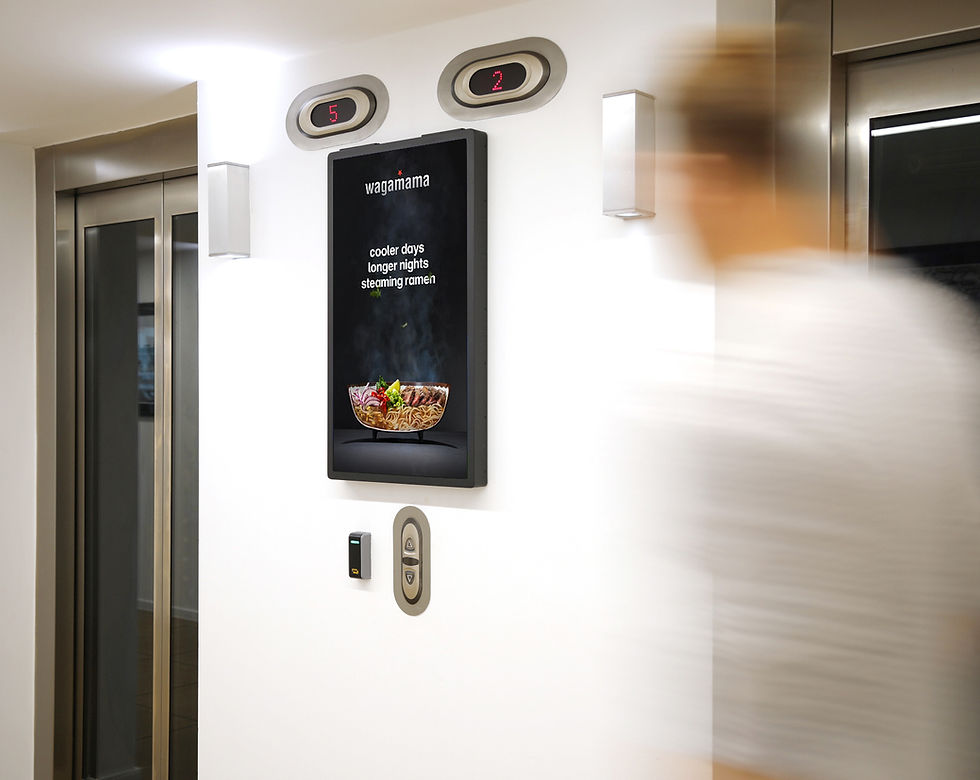
The twelve offline hours aren't blank. People are commuting, shopping, eating, moving through lobbies, riding lifts, waiting in the spaces between the parts of their day they'd describe as important. These aren't dead moments. They're often the most receptive ones.
Neuroscience research on attention consistently finds that cognitive load plays a significant role in how advertising is processed. When someone is actively engaged with a screen, navigating content, responding to notifications, or scrolling a feed, their brain is already at capacity. The ad has to fight for processing bandwidth. In a transitional moment, standing in a lift lobby with nothing immediately competing for attention, the cognitive load is lower and new information gets through more cleanly.
This is the attention quality that indoor DOOH consistently delivers, and it's the kind that doesn't show up in a CPM comparison.
The Compounding Effect
The most compelling data point for agency planners isn't about DOOH in isolation. It's about what happens when DOOH enters a plan that already exists.
According to the OAAA's guide on mobile retargeting in DOOH campaigns, adding DOOH to a campaign already running on mobile or web increases total reach by up to 303%. Broadsign's research on combining the two formats goes further: 74% of mobile users take action on their device after seeing a DOOH ad, and pairing the channels lifts engagement by up to 46%.
A DOOH screen creates what brand scientists call mental availability, the likelihood that a brand comes to mind when a purchase moment arrives. When the digital touchpoint follows later, it lands on a brain that already has the brand filed somewhere. Recognition accelerates. Trust follows faster. The digital channel didn't do that on its own. The physical moment did the groundwork.
Why Screen Count Is the Wrong Question
The DOOH market is not homogeneous and planners who treat it as one category are making the same mistake as someone who puts radio and podcasts in the same bucket because both involve audio.
A roadside billboard catches someone in a moving vehicle, for less than three seconds, at speed, competing with traffic, music, conversation, and navigation. An indoor screen in a residential lobby catches the same person standing still, in a familiar space they move through multiple times daily, with thirty seconds of dwell time and almost no competing stimulus. The creative requirements are different. The attention quality is different. The frequency mechanics are completely different.
Indoor DOOH generates what might be called organic frequency. The resident doesn't choose to see the screen repeatedly. They use their building, and the building delivers consistent exposure without the brand paying for each additional hit. This is structurally different from digital frequency, where every additional impression costs budget and risks tipping into the fatigue that Vistar Media's 2026 State of Consumer Attention report identifies as one of the fastest ways to erode campaign performance.
Where 30Seconds Media Sits
30Seconds Media is the UK's leading indoor media channel, operating inside the residential and commercial buildings where audiences live and work. The network delivers 4 million weekly verified impressions across 720+ screens, 530 sites in 20 UK cities, reaching 38,000 households, with every campaign independently attributed through Route1.
That last point matters more than it used to. As third-party cookies erode and digital attribution grows messier, the value of a channel with clean, verified, physical attribution is increasing. Route1 connects exposure directly to audience data in a way that programmatic display increasingly cannot.
The Actual Question for Planners
If a client's omnichannel strategy covers social, search, display, and video, it covers roughly four and a half hours of the consumer's day. A well-constructed plan that adds indoor DOOH starts reaching into the twelve.
The 303% reach uplift from the OAAA data is not a coincidence. It is what happens when a plan stops optimising for the measurable hours and starts accounting for all of them.
To find out how 30Seconds Media fits your next planning cycle, contact the team at hello@30secondsgroup.com.


Comments