

October 30, 2025
Black Friday DOOH: The Smart Marketer’s Secret Weapon
Beyond the banner click
Every November the same ritual unfolds: retailers slash prices, consumers rush to buy and digital channels become swamped with advertising.
The cost of search and social ads soars, inboxes are flooded with emails and every app push notification screams “flash sale”.
In this overcrowded environment it is easy for a brand’s message to be lost.
Yet research from the Out‑of‑Home Advertising Association of America (OAAA) shows that physical advertising is still noticed - 73 % of consumers have a favourable view of digital out‑of‑home (DOOH) ads and 76 % have taken some form of action after seeing one.
DOOH also drives memory: a 2025 analysis found that digital out‑of‑home campaigns deliver 54 % higher gains in ad recall than average media benchmarks.
For brands preparing for Black Friday, a medium that cuts through digital noise and encourages immediate action is invaluable.
This paper explores why Black Friday DOOH is the smart marketer’s secret weapon.
Instead of leaning heavily on statistics, it tells a story about how brands and agencies in the UK have used DOOH to stand out during the busiest retail weekend of the year.
It highlights the importance of dwell time, dynamic messaging and cross‑channel integration, and concludes by introducing 30Seconds Media’s network as a platform for brands seeking the final influence before purchase.
From digital clutter to real‑world connection
Black Friday makes even the calmest shoppers anxious.
Notifications, sponsored posts and retargeting banners create a wall of digital noise.
DOOH offers an antidote because it exists outside the personal device.
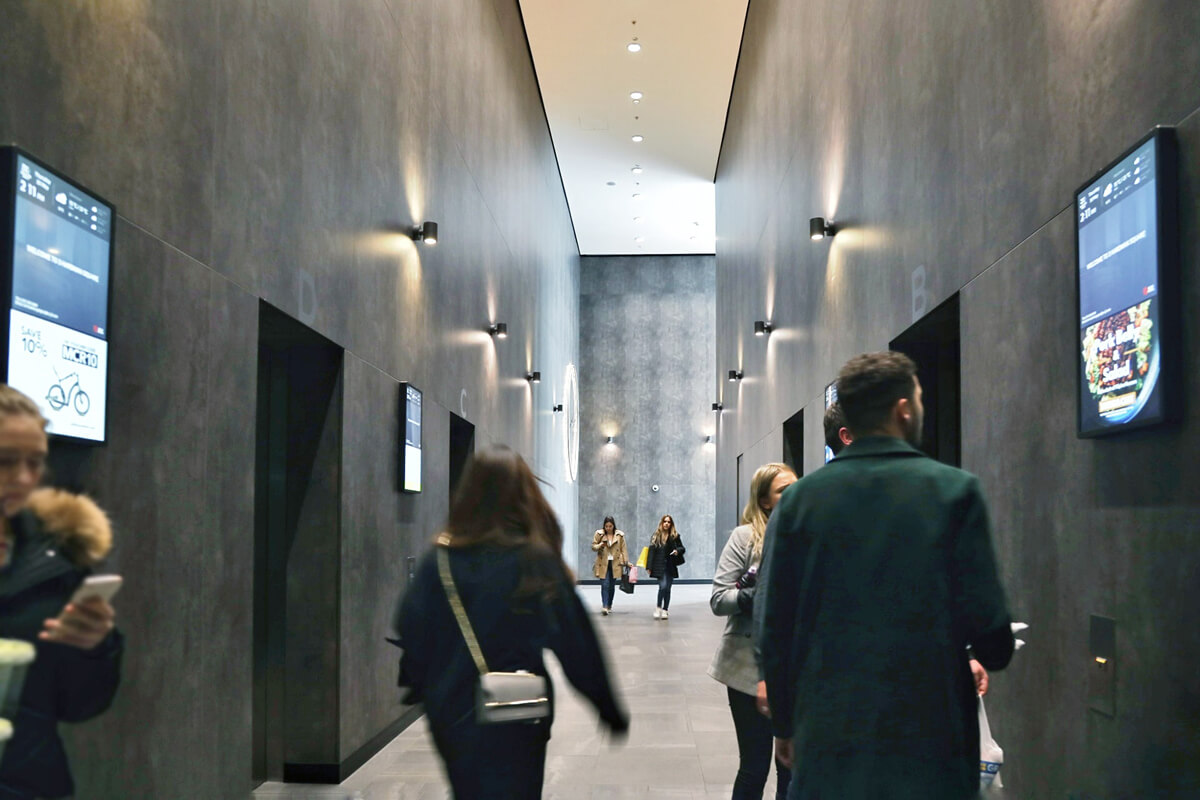
People cannot scroll past a screen in a lift lobby or on a bus‑stop panel; they look up and absorb the message.
The physical environment lends credibility and a sense of occasion.
Another strength of DOOH is dwell time - the period during which someone views a screen.
Average attention to digital signage is around 4.6 seconds, but some contexts provide far longer.
Research shows that digital signage generates 2.6 times longer dwell time than static displays, leading to higher recall and purchase intent.
Interactive creatives can double conversion rates and extend viewing time.
In residential and office lift lobbies, dwell times often approach 30 seconds, creating a captive audience that is receptive to multiple messages in a single visit.
This extended engagement enables storytelling rather than just flashes of information.
The physical positioning of DOOH screens also makes them the last influence before decision.
When a resident or office worker enters a building, they have often just been browsing deals on their phone or planning evening purchases.
A well‑timed DOOH message right before they reach their destination can reinforce intent and drive action.
For Black Friday, these real‑world impressions complement digital retargeting to create a full‑funnel journey.
Real‑world stories: brands that harnessed Black Friday DOOH
The Ordinary’s “Shop Slow” campaign
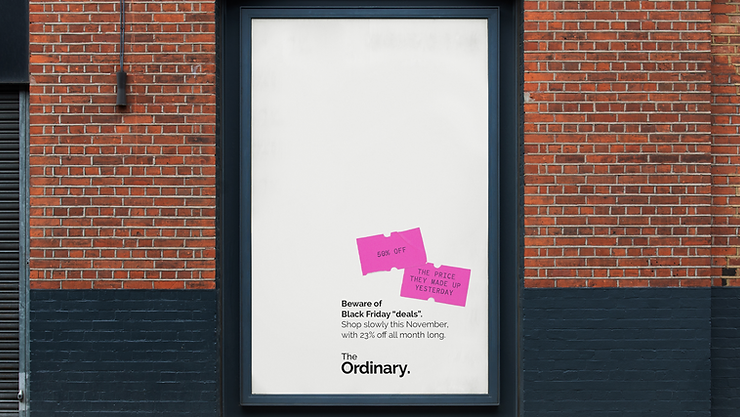
In 2024 skincare brand The Ordinary challenged Black Friday’s hyper‑consumption.
Instead of shouting about discounts, its “Shop Slow” campaign urged people across the UK to take their time.
OOH posters featured ironic slogans such as “Buy 1, get 2 for the price of 3” and “50 % off the price they made up yesterday”.
The minimalist designs - almost devoid of colour - stood out precisely because they didn’t look like typical sales ads.
The brand extended discounts throughout November and even closed its website on the day itself.
The campaign generated discussion and goodwill by subverting expectations.
This example shows how DOOH can be used not just to promote deals but to frame a brand’s values and narrative during Black Friday.
Very.co.uk’s passion‑driven targeting
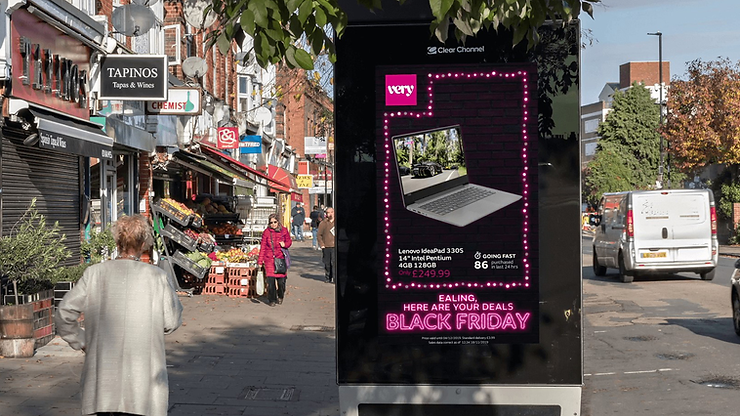
Online retailer Very.co.uk wanted to reach tech enthusiasts during its Black Friday promotion.
Working with Posterscope, Vizeum and data specialist Starcount, Very launched a targeted dynamic DOOH campaign using “passion data” derived from social profiles and other sources to locate customers interested in technology.
The creative pulled from Very’s own sales and browsing data, automatically changing products and showing stock availability in real‑time.
Ads appeared on Adshel Live screens, D48s, mall panels and Storm displays across the UK.
According to the campaign’s organisers, this approach allowed Very to “reach the audiences most likely to be interested in our Black Friday technology offers and maximise our investment”.
The case demonstrates how data‑driven DOOH can find niche audiences and update messaging dynamically as inventory changes.
Shein’s simple clarity
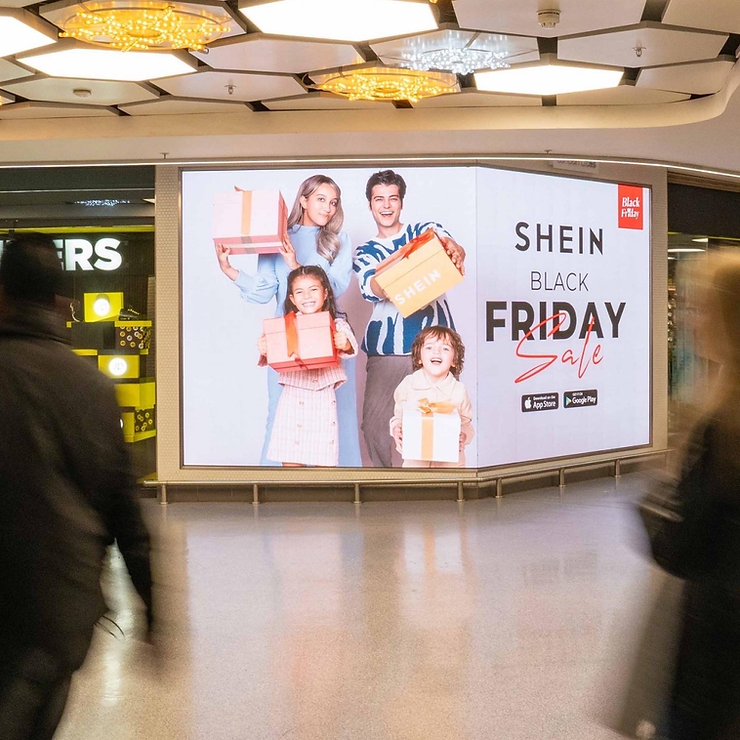
Global fashion brand Shein took a straightforward approach.
It deployed billboards and digital screens across the UK with nothing more than its logo and the words “Black Friday Sale”, plus app store logos to prompt downloads.
The simplicity cut through the chaos; consumers immediately understood what was on offer and where to act.
Shein’s success illustrates that DOOH doesn’t always need complex creative - sometimes clear messaging delivered at scale is enough to drive response.
Dell’s programmatic takeover
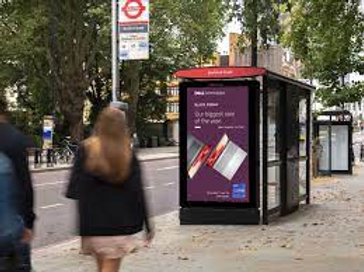
Technology brand Dell partnered with Displayce, VIOOH and Locala to run a programmatic DOOH campaign across 466 UK cities during the 2024 holiday season.
The initiative targeted “high‑tech affinity zones” - areas where tech enthusiasts, business decision‑makers and even Black Friday shoppers were concentrated.
Through a mix of DOOH panels, HTML5 banners and pre‑roll video across mobile and desktop, the campaign generated over 2.5 million impressions.
Dell reported a six‑point increase in purchase intent and a two‑point boost in brand preference compared with the previous quarter.
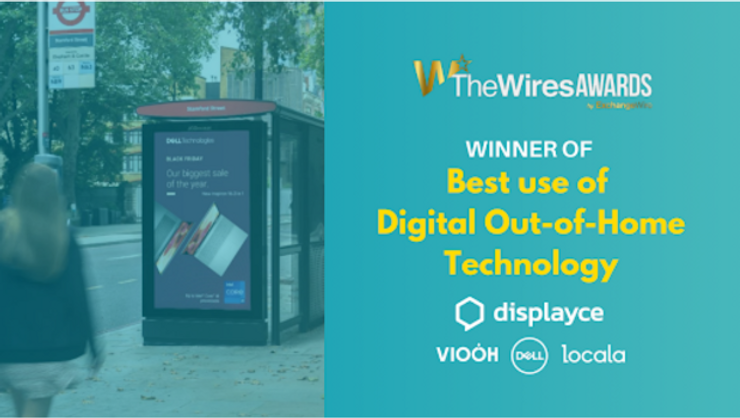
This success earned Displayce the “Best Use of Digital Out‑of‑Home Technology” award at The Wires Awards 2024 and shows how programmatic DOOH can support a shift from brick‑and‑mortar to digital retail.
Building an omnichannel funnel: DOOH, mobile and beyond
DOOH does not operate in isolation; its real power comes from integration with other channels.
A case study run by Initiative for LEGO in Italy shows how combining DOOH and mobile advertising can increase footfall; by retargeting those who were exposed to DOOH with mobile ads, the campaign delivered an incremental 37,000 store visits.
The IAB notes that cross‑channel campaigns allow marketers to harness audience data to understand movement patterns and target people both offline via DOOH and online via mobile.
This creates a seamless journey: a shopper sees a DOOH ad outside a shopping centre, then receives a mobile reminder while browsing online later that day.
QR codes and shoppable formats make this linkage immediate, enabling users to scan a code and access the deal on their phone.
Social media synergy is equally important.
DOOH campaigns often become backdrops for selfies and influencer content, prompting organic sharing.
The IAB article emphasises that marketers can encourage social engagement by integrating hashtags and interactive elements.
When user‑generated content appears on screens or in social feeds, it amplifies reach far beyond the physical footprint.
For Black Friday, brands can show live countdowns, feature user posts or highlight trending items to create a sense of community around their sale.
Crafting effective Black Friday DOOH campaigns
Drawing from these real‑world examples, here are principles to guide brands and agencies when planning Black Friday DOOH activations:
- Start early and build anticipation. UK research shows consumers begin hunting for deals at least a week before Black Friday. Launching DOOH campaigns at the beginning of November ensures that daily commuters and residents have time to absorb the message before the big weekend. Early messaging can tease offers or share sign‑up incentives, shifting to bolder calls‑to‑action as the date approaches.
- Keep messaging clear and purposeful. Shein’s success with simple billboards proves that clarity trumps complexity. Bold type, minimal copy and a direct call‑to‑action help busy passers‑by understand your offer instantly. Use contrasting colours and large fonts that are legible from a distance; avoid cramming too much information into a single frame.
- Leverage data for dynamic targeting. Very.co.uk’s campaign shows how passion‑based segmentation and real‑time stock data can make DOOH relevant. Use first‑party data and third‑party insights to select screens near high‑value audiences - tech fans, fashion lovers or parents - and adjust creative in real time. Weather and time triggers can boost relevance.
- Create a narrative across multiple exposures. In high‑dwell environments like lift lobbies, break your story into sequences. For example, a home electronics brand might highlight a different feature in each eight‑second slot: quality, price, and warranty. Because residents visit the screen multiple times a day, they will see the full narrative by the end of the week.
- Integrate with mobile and social. Use geo‑fencing to retarget DOOH viewers with mobile ads, reinforcing the message when they are ready to purchase. Include QR codes for immediate action or encourage social sharing by featuring live hashtags. A consistent visual identity across DOOH, mobile, email and social channels builds trust and ensures that each impression feels part of a single campaign.
- Measure and iterate. Modern DOOH technologies enable impression tracking, location analytics and attribution. Dell’s campaign measured changes in purchase intent; you can monitor footfall, website visits or app downloads to evaluate performance. Test different creatives, adjust schedules based on dwell times and refine your plan throughout November.
30Seconds Media: the final touchpoint before purchase
As the UK’s leading indoor media channel, 30Seconds Media operates digital screens in residential and commercial buildings - precisely where dwell time is highest.
Residents and office workers congregate in lift lobbies and entrance foyers every day, providing natural 30‑second viewing windows.
Unlike fleeting roadside impressions or scroll‑able digital ads, these moments are captive and repeated multiple times per day.
The network’s screens integrate seamlessly into the daily rhythm of work and home life.
Building announcements appear alongside advertiser messages, giving viewers a reason to look regularly.
Brands can schedule different creative for morning commutes, lunch breaks and evening returns, aligning offers with consumer mindsets.
Crucially, 30Seconds Media provides the last influence before a purchase decision.
Conclusion: storytelling at the speed of the lift
Black Friday remains a fiercely competitive retail event, but the path to success is not to shout louder in overcrowded digital channels.
Instead, it is to combine the precision of data with the power of place and time.
DOOH offers a canvas for storytelling in the real world, where context, dwell time and dynamic messaging create deeper engagement.
Brands like The Ordinary, Very.co.uk, Shein and Dell have shown that Black Friday DOOH can subvert expectations, target niche audiences, simplify messages and drive measurable results.
When integrated with mobile and social channels, DOOH becomes the first step in a conversion funnel that begins at the lift door and ends with a purchase on a phone or laptop.
For brands and agencies planning their next Black Friday campaign, the recommendation is clear:
Focus on environments with natural dwell time, tailor your creative using data and dynamic triggers, and build a narrative that unfolds over multiple exposures.
Complement these real‑world impressions with mobile retargeting and social engagement.
And when seeking the final touchpoint before your audience makes a purchase, consider the lift lobby screens operated by 30Seconds Media.
In a world where attention is fragmented, they offer a rare opportunity to capture and inspire at precisely the right moment.


CW12 4TR, United Kingdom

letschat@peppermintsoda.co.uk.